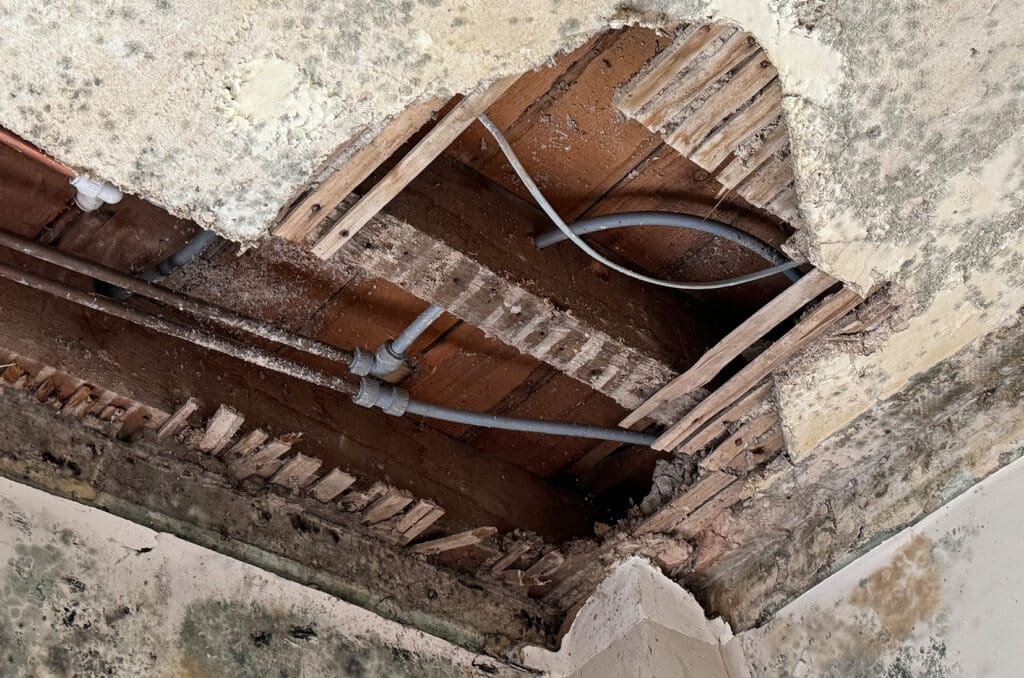
Damp and Mould Remediation
Professional mould prevention and eradication services protecting buildings and occupants after water or fire damage.
Enquire


Preventing Mould From Reoccurring
Mould can appear quickly after events like water leaks, flooding, or even fires - remember that firefighters often use large amounts of water! The presence of mould in a building is undesirable and can cause significant problems in both the short and long term. Often, it is the spores released from mould which pose the greatest health risks.
That's where experienced loss mitigation professionals, like our team at Structured Designs, come in. We assess the risk of mould developing and take essential steps to stop it from spreading.
Our Proven Mould Prevention and Eradication Process
Our strategy focuses on creating an environment where mould cannot thrive:
- Moisture Assessment: We identify where moisture is present or trapped.
- Material Removal: We safely strip out damaged building materials to assist in rapid drying
- Sterilisation: We apply specialist treatments to eliminate the risk of mould developing.
- Drying & Ventilation: Most importantly, we use drying equipment or ventilation to achieve cool, dry air conditions - a primary aim in drying the building and preventing mould growth.
- Ongoing Monitoring: We continuously monitor the building's moisture levels and perform micro-organism swab testing if necessary to ensure a successful outcome.

Is Mould Dangerous?
Yes, mould exposure can pose health risks. Contact with mould can cause both short-term discomfort and long-term health complaints for many people, especially those with increased sensitivities, children, and the elderly.
Common Health Effects of Mould Exposure:
- Allergies: Mould spores can trigger common allergic reactions like sneezing, a runny nose, red eyes, and skin rashes.
- Breathing Difficulties: Inhaling spores can cause coughing, wheezing, and shortness of breath. It can also trigger dangerous asthma attacks in susceptible individuals.
- Asthma Development (Children): Some research suggests that young children living in mould-infested homes may be at a higher risk of developing asthma.
- Infections: Prolonged exposure can lead to respiratory infections such as bronchitis or sinusitis.
- Severe Cases: In individuals with severely compromised immune systems, mould can potentially lead to life-threatening infections affecting various organs.
This is for informational purposes only. For medical advice or a diagnosis, consult a professional.


